It’s not a case of whether your business should use social media to engage your target audience. It’s a case of choosing the right social media platform for your business and what you’re looking to achieve.
95% of all online users are on social media. This amounts to approximately 5.17 billion social media users, which is 63.7% of the world’s population. Cumulatively, those users spend 12 billion hours per day on social media, which equates to 14% of their waking hours. Over the last year the number of users on social media has grown by an estimated 282 million and experts predict that this growth trend will continue. Consequently, while having a multi-pronged marketing strategy can’t be downplayed, a key focus in that strategy must be building your presence on social media.
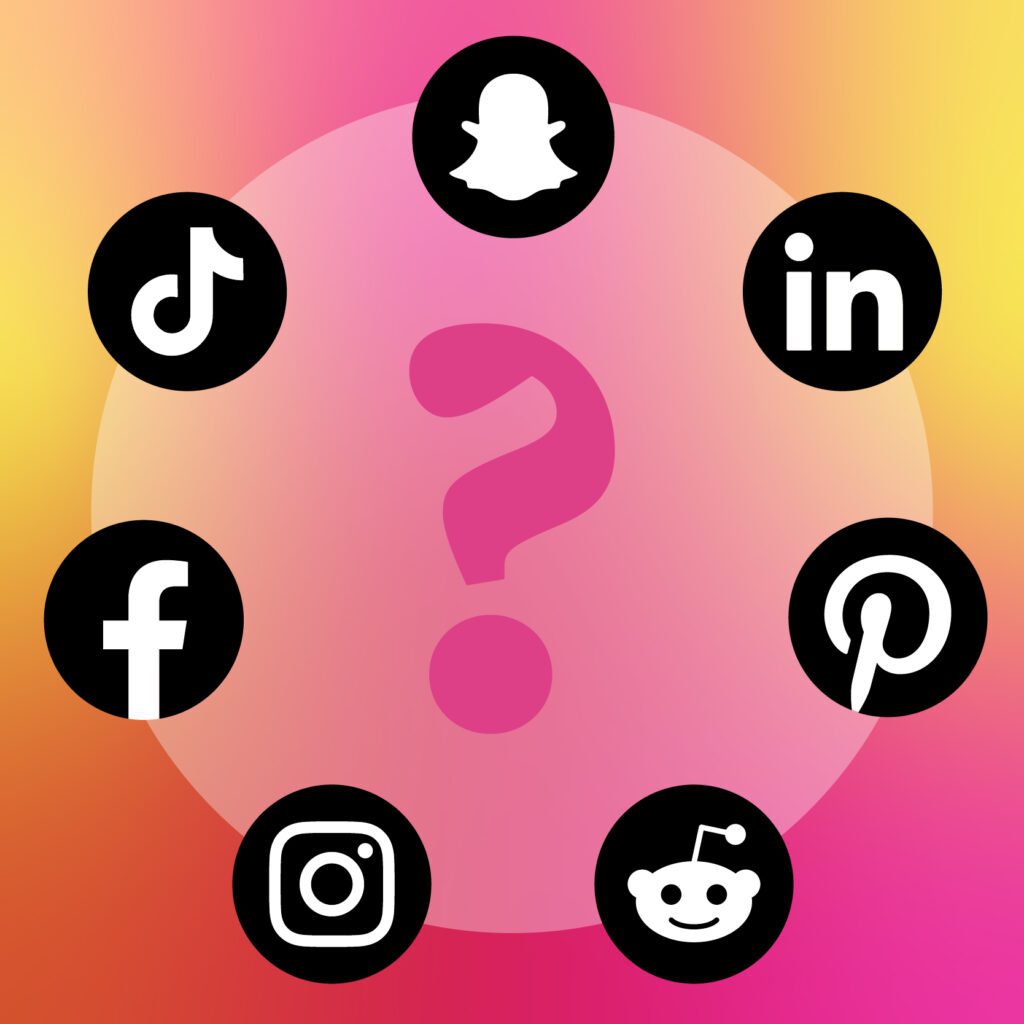
Most Used Social Media Platforms
- YouTube
- Facebook Messenger
- TikTok
Social Media Platform Content
- YouTube: Videos.
- WhatsApp: text and emojis, images and stickers, files and documents, audio and video, interactive buttons (CTA and quick replies) and location.
- Facebook: text, photos, videos and live broadcasts, link posts, reels, and stories.
- Instagram: visual posts and photos, reels, stories, videos, live broadcasts and interactive content.
- Facebook Messenger: messages, photos, videos, stickers, audio and files, voice and video calling.
- TikTok: short videos leveraging music.
- LinkedIn: text, images, videos, documents and polls.
Understanding Your Target Audience
Your marketing ecosystem has 4 key components that need to connect and resonate with your target audience. Ergo – you need to know who your target audience is and what social media platform they prefer. You’re not going to change your audience’s online preferences. But you can engage with them using the right content and post it across the social media platforms they’re using the most. Playing to your target audience’s consumption behavior will help you resonate, expanding your online community, and growing brand awareness and loyalty. Determining which platforms your audience is on often comes down to testing, outside of having a strong pulse on the kinds of users and content being shared per channel. That’s where an agency can come in. They help profile your target personas, where they engage, and ways to personalize content that will motivate audiences to interact with your brand.Aligning Platforms with Business Goals
Social media goals should extend beyond merely counting post likes and shares. They need to include a holistic assessment of your target audience’s interaction, including a pulse on customer satisfaction. Beyond these more community-focused objectives, social media can support brand discovery in the form of increasing website traffic and fueling lead generation. How well your goals are defined will determine how effective your social media campaigns are. Therefore, ensure that your goals are specific, measurable, achievable, relevant, and time-bound (SMART).Top 5 Social Media Business Goals
- Increase brand awareness and reputation.
- Improve and boost target audience engagement.
- Gain website traffic through an engaged social media following.
- Promotes sales and drive conversions.
- Acquire insights into the target audience, competitors, and industry through social listening.
How to Choose Platforms that Align with Social Media Goals
While every social media platform serves to build brand awareness and community, not all platforms are made equal when it comes to serving the different stages of your marketing funnel.. Understanding the best use of each platform in serving your business goals will help you make the most of a strong social media mix.Matching Business Goals to the Right Social Media Platform
- YouTube: For building brand awareness and nurturing communities through deep, engaging storytelling.
- WhatsApp: For personalized customer service, group messaging, and engaging customers with real-time updates and offers.
- Facebook: Ideal for community building, targeted ads, and content sharing across various formats to reach diverse audience segments.
- Instagram: For building brand aesthetics, showcasing products through imagery and Reels, and engaging with users through stories and influencer collaborations.
- Facebook Messenger: For direct customer service, personalized interactions, and automated messaging via bots to nurture users’ interaction.
- TikTok: For short-form, viral video content that fosters authentic engagement and brand building through creative, trending, and challenge-based marketing.
- LinkedIn: For B2B marketing, networking, and thought leadership, ideal for building professional brand credibility, recruiting, and sharing industry insights.
 Pulse
Pulse